Māori success in Education

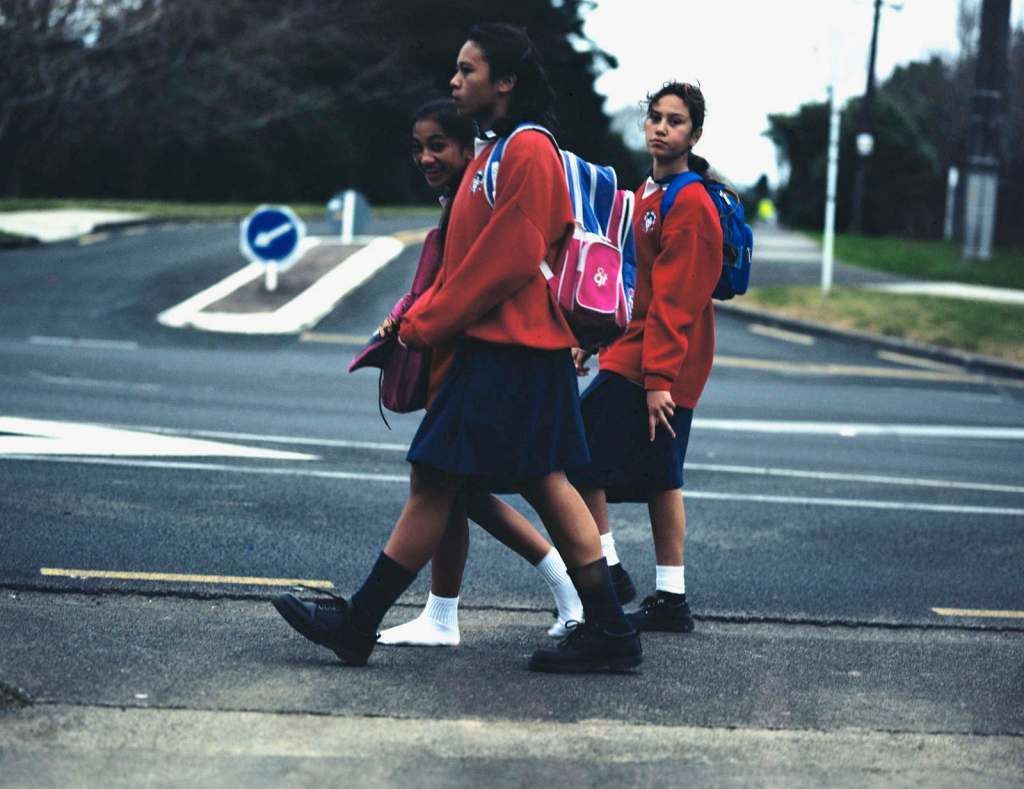
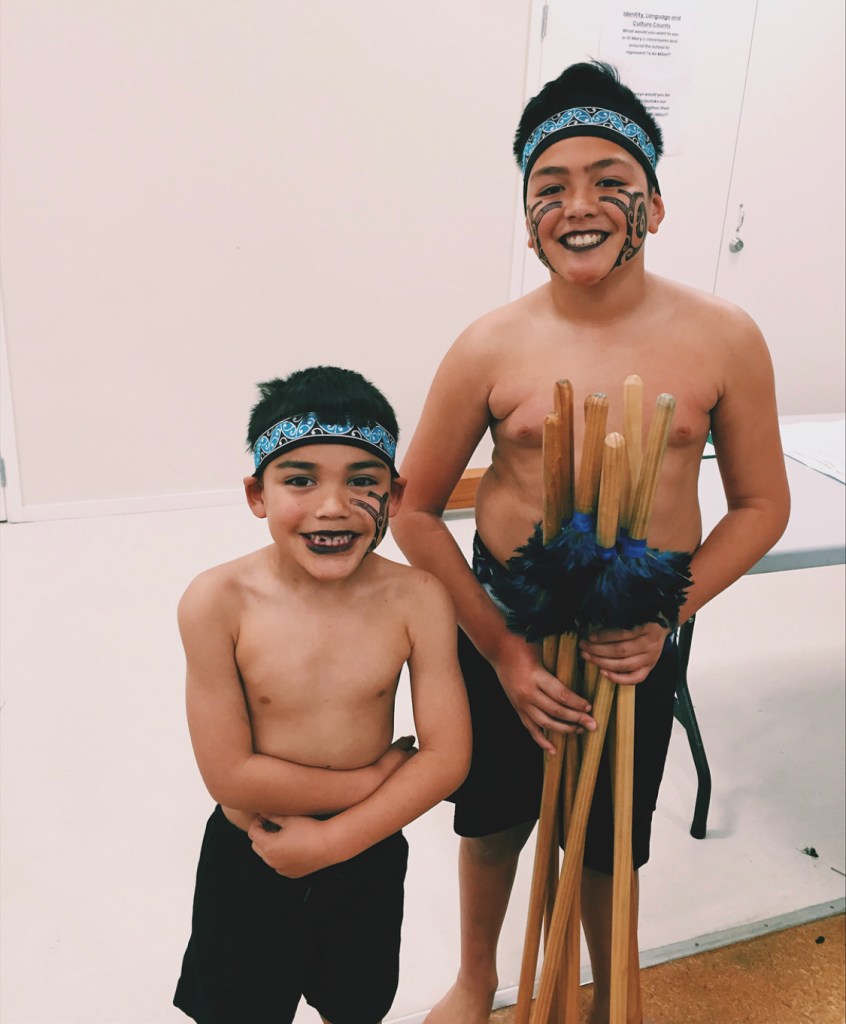
Louisa Afoa, Isaac and Chris, 2018.

You perhaps have seen headlines that talk about the achievement gap, which usually speaks to Māori achievement within the NZ curriculum. In our current education system the statistics tell us that Māori are not doing as well as their Pākehā counterparts and in 2018 only 65.8% of Māori left school attaining NCEA Level 2 (or equivalent) in comparison to 82.4% of Pākehā. There are lots of conversations about why, but really at the heart of it all the answer is the effects of colonisation. 

It’s impossible to talk about Māori and education without acknowledging the use of education by colonisers as a tool to oppress Māori. Pākehā destroyed indigenous education systems (physically burning down in some instances) and built their own with the agenda to impose a framework that would keep Māori disadvantaged. “Once they had established their own education system and began to teach our children, they also began preparing them for a world that they, the colonisers, would control”(Jackson, 2016). Banning Te Reo in school and only allowing vocational education for Maori to prepare them as labourer are only some of strategies implemented by Pākehā in the education system to keep themselves in power. 

So what does that mean for education now? There has been a shift in thinking about how we engage learners, in particular Māori learners as schools practice culturally responsive pedagogy as a strategy to remedy the ‘achievement gap’. 

Culturally responsive pedagogy can be described as “Teachers creating a context in the classroom that is responsive to the culture of the child … based upon the notion of relationships being paramount to educational performance … It’s a serious business, education. It’s about caring for people, caring that they learn, and it’s about creating learning relationships so that you ensure they are able to learn, and we term it a culturally responsive pedagogy of relations.” (Russell Bishop, 2011, EDTalks)

Although I think that culturally responsive pedagogies play such an important role in uplifting the spirit of our learners I can’t help but think of this question posed by Moana Jackson.

“How do we educate for ranga­tiratanga rather than just equating success with a university degree, and so on?” (Jackson, 2016). As much as we try and remedy the ‘achievement gap’ our institutions are still colonial and so is it possible to dismantle the system from within or will we need to rebuild one? Like Jackson believes is “the only education system that will ultimately serve our people well is one that flows from and is guided by decisions made by our people”(Jackson, 2016)?

When I think of the achievement gap I think about my nieces and nephews because like any whānau member I want them to be able to thrive in life and enjoy learning. I want them to feel confident, safe and valued in school. I want them to be able to see themselves represented in their learning and in the teaching staff. I want them to learn beyond what they know but also stay rooted as we acknowledge that our ancestors are with us always. Most importantly I want them to know that being both Māori and Pacific doesn’t make them inferior.

So if it comes to dismantling the current education system so we can educate for rangatiratanga, I’m ok with that, because whats good for Māori is good for all of us.

References

Jackson, M. (2016). Decolonising education. In Decolonisation in Aotearoa: education, research and practice (pp. 39–47). Wellington,: New Zealand Council for Educational Research.

Bishop, R. (2012). EDtalks: A Culturally Responsive Pedagogy of Relations.
Valuing the arts

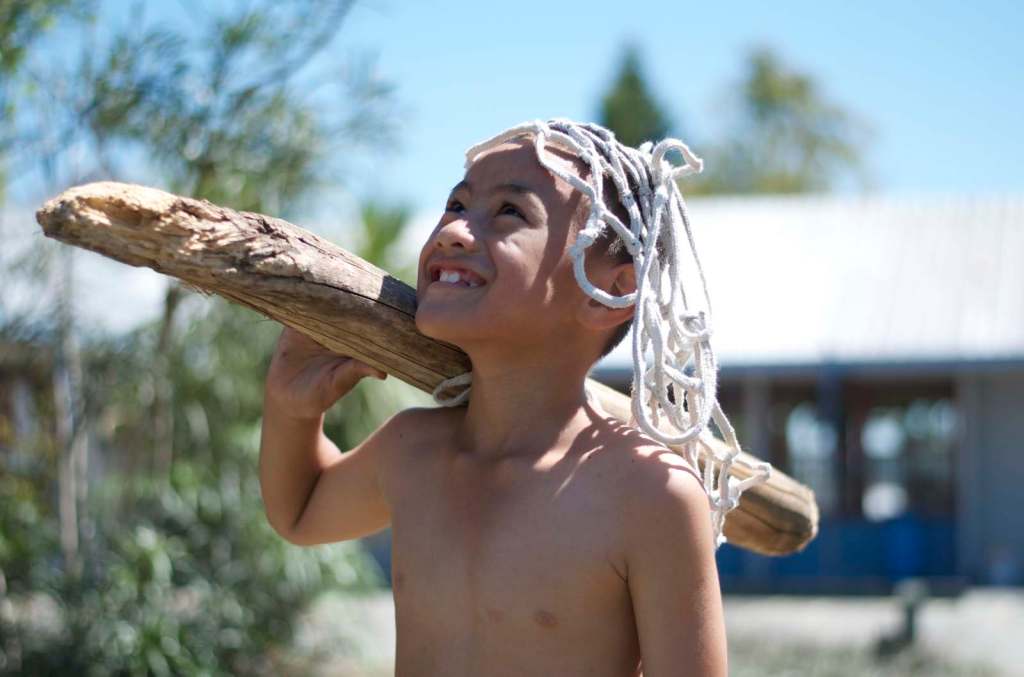
A project with Edith Amituanai, Kimi Ora Community School & Hastings City Art Gallery.
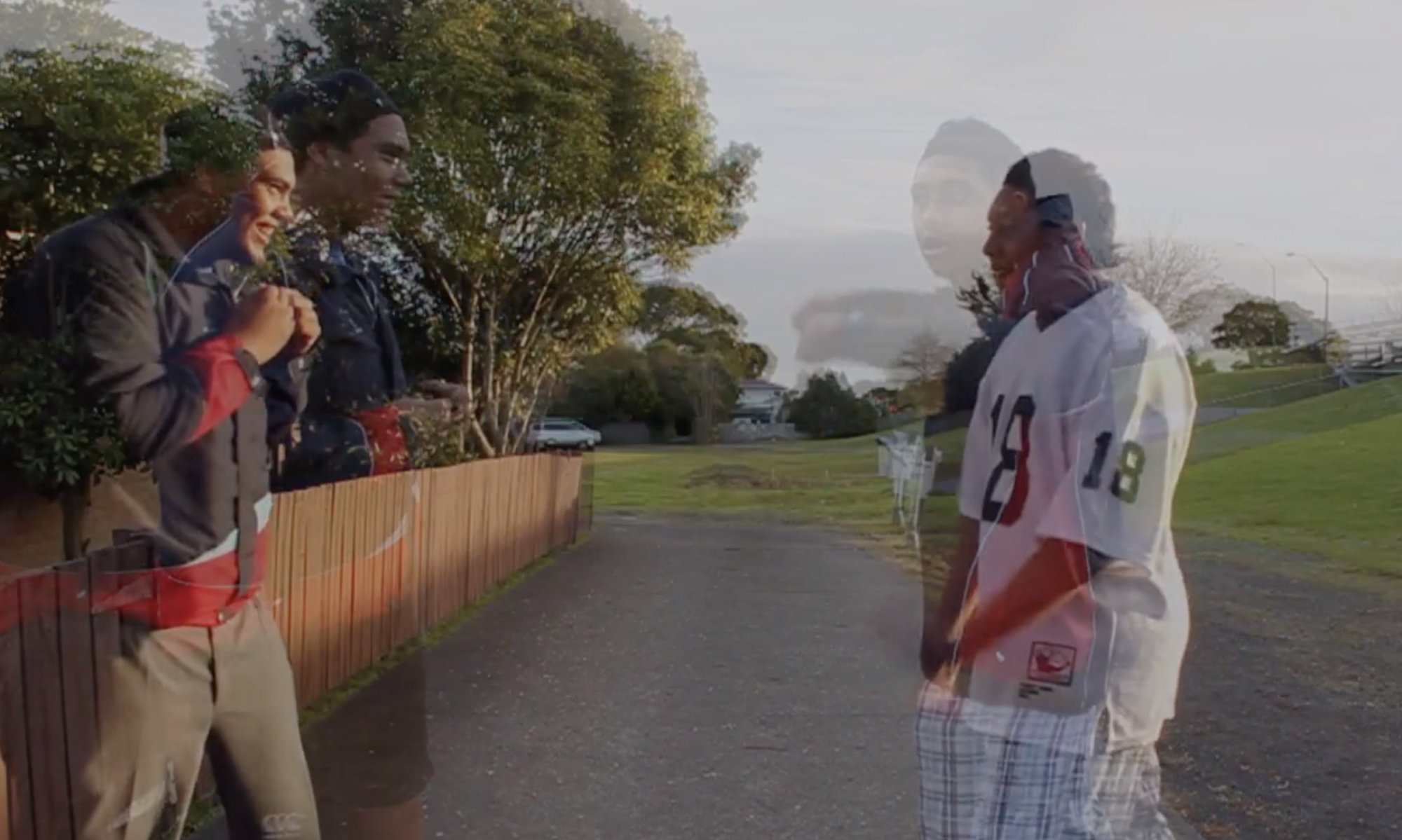
Kavana Ioane, Lyndon ‘I am ‘Maui’, digital photograph, 2017.

I feel conflicted in the classroom at times when I talk to students about career paths in the creative sector. The arts — especially visual arts is not often seen as a viable career and so I feel I have duty to my subject to counter that notion and show the various avenues one could take, whether its curatorial, public programming, arts writing, creative directing and more — but the recent Creative New Zealand report on creative professionals in 2019 paints a dire picture. The median wage in Aotearoa for people earring a wage or salary is $51,800 however the median creative income for creative professionals is $15,000 (creative professionals supplement their income by working outside of the creative sector). In a recent press release PM Jacinda Adern spoke about Arts and Culture in NZ:

“Arts and culture are not a ‘nice to have’. They are an essential part of our individual, community and national identity. For too long they have been treated differently when it comes to sustainable growth, career paths and economic benefits,” (Adern, 2018).

I agree, Arts and Culture is important to us as individuals and to our communities and so its always disappointing to see the negative attitudes towards visual art that we see in the world reflected in our school communities. Unfortunately I’ve seen many instances when visual arts is not supported by the school and families. An example of that is just recently there was an exhibition to showcase all completed work done by year 11 students — only two teachers showed up, another was a question was asked about a promising students going to arts school and the response was “there’s no way he would be allowed”. Too often I hear both students and teachers talk about the arts as the ‘easy’ and ‘fun’ subject dismissing the complex thinking that goes alongside both making and interpreting works. 

With that being said I have seen some incredible projects from schools that see the value in the arts and the positive influences it has on their school community. A favourite that I have seen is collaboration that artist Edith Amituani has with Kimi Ora School in the Hawkes Bay. Over five weeks Edith taught the students about photography and created conversations with them about what it meant to take photos of people. She then gave the students her camera where they documented their lives at school and at home. The result was an incredible art making journey that ignited the curiosity and visual literacy of the students and the work then shown at the Hastings Art Gallery.

In all the art departments I’ve been in this year, the love and passion for the arts I see in the teachers I’ve spent time with has been inspiring. I see the drive to create worthwhile experiences for learners so that they are able to make work that starts with thinking about the self before developing and thinking of ideas and concerns that they would never have thought about before their art making process. 

The New Zealand curriculum states that in visual arts education: 

“Students develop visual literacy and aesthetic awareness as they manipulate and transform visual, tactile and spacial ideas to solve problems.. As they develop their visual literacy, students are able to engage with a wider range of art experiences in increasingly complex and conscious ways” — I just wish others saw it like that too. 

References 

Adern, J. (n.d.). Recognising the importance of our arts, culture and heritage. Retrieved from https://www.beehive.govt.nz/release/recognising-importance-our-arts-culture-and-heritage.

Published for the Ministry of Education by Learning Media. (2007). The New Zealand curriculum. Wellington, N.Z.

Bad Housing in Aotearoa and our young people

Louisa Afoa, Reuben’s Room, 120 film, 2011.

Its funny how you normalise bad housing conditions because thats all you know and your only option. Isn’t overcrowding a thing in everyones household? 

At the moment there are eleven people that live in our rented four bedroom family home — five adults, six kids and one cat. We make it work because we have to ie. we’ve become very good at negotiating a shower schedule, with kids at night and adults in the morning. The sad thing is that we are by far not the worse off in Aotearoa, the New Zealand Herald reported “the number of people in the urgent queue for social housing has passed 10,000 – a 70 per cent increase in the last year’ (Davidson, 2019). Just recently on Checkpoint they interviewed a young girl from Tamaki College who’s family had been evicted by Housing New Zealand in 2016, their only option while HNZ helped find them another house was to live in a tent in her Nans backyard. This process took six months. 

Bad housing can be many different things to different people and involve a wide range of issues, the most prominent being homelessness, overcrowding and poor conditions. These issues greatly impact the lives of young people and their learning.

Homelessness: This refers to families who have been fund to be homeless by a local authority and placed in temporary accommodation. 

Overcrowding: An example of overcrowding conditions would include situations where different sex children ages 10 or over have to share a bedroom; where parents have to share a bedroom with a child or children; where there are more than two children in a bedroom and where rooms such as kitchens and living rooms are used as bedrooms.

Poor conditions: Unfit or poor conditions are where housing is in need on substation repairs; is structurally unsafe; is damp, cold, or infested; or is lacking in modern facilities. 

(Harker, 2006).

Studies have shown that in bad homes children are more likely to get sick. “When homes are damp and overcrowded, these are nourishing environments for viral pathogens to grow. The body becomes susceptible to these and kids pick them up”(Chen-Xu, 2015). This results in children from bad homes having more time off school due to reoccurring illness. These conditions can be so harmful that they can result in death as “a NZ coroner ruled that cold, damp conditions in a state-owned rental property could not be discounted as contributing to the death of a two-year-old child [in 2015]” (Inadequate Housing in New Zealand and its impact on children, 2016). Access to warm and safe homes is a universal right and our children shouldn’t be dying as a result of bad housing.

The causes for poor living conditions in Aotearoa are multi faceted and can be attributed to many things including “rising property prices and rents in urban centres, and outdated regulatory framework governing housing quality and security of tenure for private tenants and income poverty” (Inadequate Housing in New Zealand and its impact on children, 2016). Bad housing not only affects a young persons health physically but also their mental well-being as well. 

With all the staggering statistics about child poverty and inadequate housing in New Zealand, it’s very likely we’re going to see the faces of those children in our classrooms. If you teach in a low socio economic area you likely to see a lot of those faces in your classroom. This won’t be easy, but one of the best things that you can do in your class and for your class is be a caring teacher that uses effective pedagogy. One of the favourite things I heard from a teacher of a low socio-economic high school was “they actually just want to learn” — so please don’t assume that don’t. 

References 

Chen-Xu, M. (n.d.). New Zealand’s poor housing is making our children sick. Retrieved from https://www.stuff.co.nz/national/health/75275542/new-zealands-poor-housing-is-making-our-children-sick.

Davison, I. (2019, February 19). Wait list for social housing tops 10,000. Retrieved from https://www.nzherald.co.nz/nz/news/article.cfm?c_id=1&objectid=12205332.

Harker, L. (2006). Chance of a lifetime: the impact of bad housing on childrens lives. London: Shelter UK.

NZ Child and Youth Epidemiology Service, & University of Otago. (n.d.). Child poverty related indicators. Retrieved from http://www.nzchildren.co.nz/#Housing.

Thematic snapshot report to the UN Committee on the Rights of the Child: Inadequate Housing in New Zealand and its impact on children. (n.d.). Retrieved from https://www.hrc.co.nz/.

When are we going to start talking about Pakeha students making art about indigenous people?

Janet Lilo, Michael, digital photograph, 2012.

It’s not often that I come across students’ work that leaves me with a bad taste in my mouth. One of visual arts greatest qualities as a subject is the space given to learners to think about and explore ideas through practice — so even if the practical skill level isn’t high in a portfolio board, the work is still a reflection of the students thinking, who they are, and their interests at that point in time, which is really special. 

What I find difficult to digest is when Pakeha students make work with images of indigenous or POC people without thinking about how they’re representing them or what it means. I should be clear that this is not a criticism of the students themselves, I know that there isn’t any ill intentions and they’re just thinking through ideas and finding content that they’re interested in. What I think this reveals is the lack of conversation and questioning in the classroom about the power of representation. 

When I think about the complexities of representation I always find myself going back to a statement by artist Janet Lilo: 

“When I was on Maori TV, I was presented as a Maori artist and when I was on Tagata Pasifika they called me a Samoan artist which I found quite funny. My Niuean Grandfather (bless his soul) would be upset with that. I wonder what I’d be if I was on Crimewatch — who would claim me then” (Lilo, 2013). 

She talks about the nuances within her multi ethnic background while also making poignant comments of how we see Pacific people in the media. 

As Lilo exemplifies, representation is complex and representation is political. In Aotearoa and across the globe indigenous artists have been continuously making important work that respond to and counter Eurocentric representations of their communities and histories. 

“Indigenous peoples want to tell our own stories, write our own versions, in our own ways, for our own purposes” (Smith,1999).

We’re constantly fighting for autonomy and agency. In the subject Art History students talk about post colonialism and discuss contentious art like the works of Dick Frizzell and why it might be seen as problematic to indigenous people. From what I’ve seen so far in my practicum experiences and also my own personal high school experience these discussions don’t happen often in visual arts. However this critical thinking and questioning is a necessary process that should happen alongside their art making.

These conversations need to happen so that there is sensitivity and thoughtfulness when we approach the representation of both our own communities and communities that we sit outside of. It’s not to gate keep students from exploring ideas but letting them ask themselves.. in my art making am I giving power or taking it away? 

I think it’s a disservice to all art students if we’re not engaging with contemporary issues and questions that exist in our current arts climate. Art is not a bubble separated from the world but a reflection of it, so what better space to start a conversation than the classroom? 

Breaking up with Teaching

Edith Amituanai, Hendo, ‘The End of My Driveway’, 2011-12, C-type photograph.

“Is this Job tough? you betcha, oh god you betcha. But it is not impossible, we can do this. We’re educators and we’re born to make a difference” (Rita Pierson, 2013). 

When I talk to friends about their school experiences its not often the good memories that come to mind first, but memories of terrible teachers that made them feel insignificant. They often described them as teachers that you could tell that were only there to collect a pay cheque and didn’t care about their learning. I didn’t always have the best experiences with my teachers but I never doubted their intention to teach and I couldn’t imagine a teacher that was only there to collect a pay cheque until I saw it for myself. 

This teacher isn’t a vile human being who hates children, not at all. This is an educator that has been teaching for over twenty years and for many nuanced reasons doesn’t enjoy it anymore, but unfortunately can’t afford not to teach. Bills still need to be paid — that is life. Although I can sympathise with their position, I also can’t help but think that it’s not good enough. How can you be a good teacher and build positive relationships with the learners when you don’t want to be there anymore?

In Rita Pierson’s Ted Talk she recounts a story about a colleague:

“A colleague said to me one time, ‘They don’t pay me to like the kids. They pay me to teach a lesson. I should teach it, they should learn it. Case closed.’ Well, I said to her, ‘You know, kids don’t learn from people they don’t like (Pierson, 2013).

Although the situation is different, I cant help but think that kids also don’t want to learn from people they know don’t want to teach. In general, knowing that someone would rather be somewhere else rather than with you doesn’t feel too great, so I can imagine that sensing your teacher is disengaged in the classroom and isn’t interested in helping you must suck. Young people aren’t stupid, they can feel when you care and they can feel when you don’t. 

James Comer said that “No significant learning can occur without a significant relationship”, and I might seem like broken record talking about building healthy relationships but its important, so important that its written into our teaching code of ethics.

WHANAUNGATANGA: engaging in positive and collaborative relationships with our learners, their families and whānau, our colleagues and the wider community.”

I think there can be a sense of guilt when you realise that you don’t want to teach anymore — we get into teaching because we love learning, we love our subject and we love sharing that knowledge with young people while also learning from them and about them — so its hard to admit that you’ve changed, you’re a different person and you need something different in your life to be happy. Just like staying in a relationship when you know the love is gone will turn toxic, so will staying in teaching for the sake of a pay cheque. Sometimes making the biggest difference is knowing when to let go and recognising that you’re not teaching to the best of your abilities. 

You and your classes deserve better.

Restorative Practice

Edith Amituanai, ‘Sio walks the line’, C-type photograph, 2015.

In my first week of my first practicum there was a big brawl on at the end of the day on a Friday. By Monday the next week twelve students had been either suspended or expelled. I remember being really confused about the way the principal spoke about the students during the staff briefing that Monday. He described the school as being a garden and in order to keep the garden healthy that we needed to pull out all of the bad weeds. I understand the idea of wanting to keep your students safe and making people accountable for their actions, but is that the only way? If someone does something bad then they’re a bad person and don’t deserve to be part of the community anymore? 

When writing about restorative practices for schools Damien Croxford writes that: 

When students are punished by exclusion (for example, withdrawal, suspension) they are disconnected from the school community including teachers and their well-behaved peers (that is most students). This alienation means they seek out others who have been excluded also, creating a ‘negative subculture’ in the school. (Croxford, 2011, p45)

Its normal to find comfort and connection from people that you can relate to, and so when you stigmatise learners into roles ie. the ‘bad’ student, it makes sense that they’re going to reach out to those that understand that stigma — and with no support from the school and teachers play into the role that they feel defines them. 

The belief that punishment changes behaviour is a punitive approach which focuses on what rules have been broken, who is accountable and what punishment is needed. However when restorative practice is used “the emphasis is on the harm that has been done, rather than who is to blame [and] on relationships and personal accountability through reflection” (Croxford, 2011, p46). Restorative approaches involve the decisions being made about resolving conflict to include all parties that are involved. 

Creating empathy is important for a restorative practice for both the school and learners. When we make an effort to understand students, whats going on at their home, at school with friends, and their perspective, we gain a better understanding of why conflict has occurred and what lead to it. This can only happen through dialogue and reflection, not just between the school and student but also with whanau so that the process for creating consequences is fair and understood by everyone involved. It means that learners remain part of school community and are part of the restorative approach to solving the problem. 

“We cannot overestimate the potential for restorative practice in school, but nor should we underestimate the challenges to accomplishing a change of this significance in school culture. Yet the number of schools in various stages of implications around the word suggests that restorative practice.. will be a transformative movement that promises change for schools around the globe” (Costello, 2009).

If the school is a garden, it’s not the learners themselves that are weeds to be extracted and cast away, but rather the harmful behaviours that sometimes take place in the classroom. The restorative ways that we can prevent those behaviours in the classroom is by continually working on building positive, caring and supportive relationships, high expectations and mutual respect. The best change is the change that happens with people, not the change made for them. 

Design a site like this with WordPress.com
Get started